Why Does Your Master Sound Different on Every Speaker?
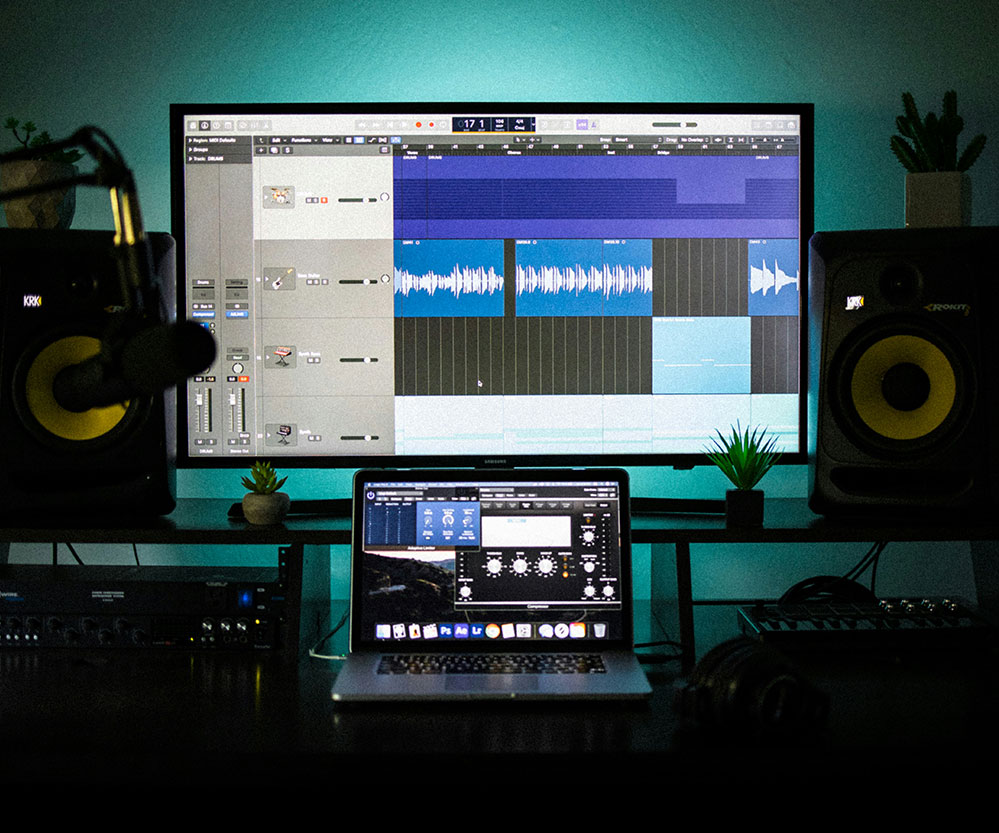
You finish a track, play the master through your studio monitors, and everything feels right. The low end is powerful, the vocals or lead elements sit perfectly in the mix, and the track feels wide and energetic.
Then you play it through your phone. Suddenly the bass almost disappears.
You try it in the car and now there seems to be too much bass. On headphones, the high end feels sharper than you remember. On a Bluetooth speaker, elements that seemed perfectly balanced in the studio start competing with each other.
Nothing has happened to your master. What you are hearing is translation, the ability of a track to maintain its musical balance across different playback systems.
Perfect consistency is impossible. Every speaker, room and pair of headphones changes what reaches your ears. The goal of a good master is therefore not to make a song sound identical everywhere, but to make sure its important characteristics survive those changes.
Every Playback System Has Its Own Sound
A studio monitor, laptop speaker, smartphone, club system and pair of earbuds reproduce sound very differently.
Small speakers physically struggle to reproduce deep sub frequencies. A club system may emphasize frequencies that barely register on a laptop. Headphones remove the acoustics of the room entirely, while speakers interact with walls, furniture and the listener's position.
This is one reason judging a mix or master from a single playback system can be misleading.
Imagine a bass line whose energy is concentrated almost entirely below 60 Hz. Through a capable studio system it may sound enormous. Through a phone speaker, much of that fundamental frequency cannot be reproduced properly, so the bass line appears to vanish.
A better-balanced track may contain enough harmonics higher in the frequency spectrum for the listener to still perceive the bass even when the deepest frequencies aren't reproduced.
The same principle applies throughout the mix. Important musical information shouldn't depend entirely on one narrow part of the frequency spectrum.
Good Translation Starts Before Mastering
Mastering can improve tonal balance, dynamics, loudness and overall consistency, but it cannot completely rebuild a mix whose fundamental relationships do not work.
If the kick and bass are constantly fighting for the same frequencies, aggressive mastering will not magically separate them. If vocals are buried underneath synths, pushing the final master louder may make the problem even more obvious.
This is why mix preparation matters. Tone Tailor's mix-preparation guide recommends supplying a clean, high-quality mix with sufficient headroom and checking the track for issues such as unwanted noise and mono compatibility before mastering.
One particularly useful test is listening quietly.
At low playback levels, dramatic bass and treble become less dominant to our perception. The central elements of the track become easier to judge. If the hook, rhythm and main musical idea remain clear at low volume, that is often a positive sign.
Mono is another valuable reality check. A huge stereo image can be exciting, but excessive phase differences between the left and right channels can make certain sounds significantly weaker when they are combined into mono. Checking the mix this way can reveal problems that are difficult to notice while listening only in stereo.
Master for Balance, Not for One Perfect Listening Setup
The temptation is to keep adjusting the master after every playback test. The car sounds bass-heavy, so you remove bass.
Then the earbuds sound thin, so you add it again. Then the studio monitors sound too bright, so you reduce the highs. This can quickly turn into an endless loop because there is no master that compensates perfectly for every speaker in existence. Instead, look for patterns.
If your track sounds too harsh on your studio monitors, headphones, phone and car system, there may genuinely be too much upper-frequency energy. If it sounds harsh only through one cheap Bluetooth speaker while sounding balanced everywhere else, the speaker is probably the larger variable.
Reference tracks are extremely useful here. Choose professionally released music with a broadly similar style and compare it through the same playback system at a similar perceived volume. You're not trying to copy the reference's exact EQ curve. You're establishing context.
If both your track and the reference become bass-heavy in your car, the car system is probably contributing to what you hear. If only your track becomes excessively boomy, the mix or master deserves another look.
Mastering is ultimately about finding a balance that survives the real world. A listener may hear your song through expensive headphones, a festival PA, laptop speakers or a single Bluetooth speaker in a kitchen. You cannot control any of those systems. What you can control is whether your track has enough tonal balance, clarity and dynamic stability to communicate its energy through all of them.
A great master doesn't sound exactly the same everywhere. It still sounds like the same record everywhere.